
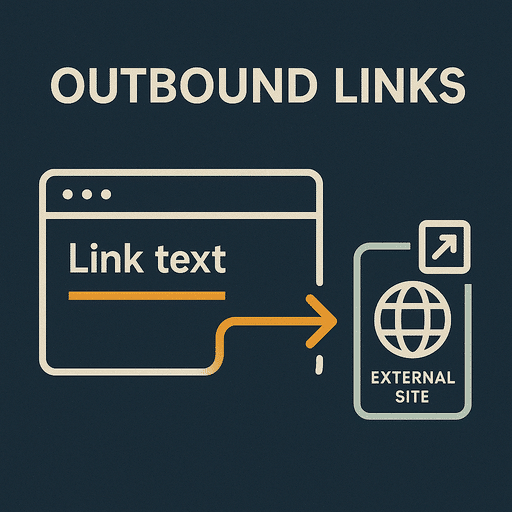
Outbound links, also known as external links, are hyperlinks from your website to another external page. These links play a central role in both the user experience and your SEO strategy. Although the focus is often on inbound links (backlinks and link building) in relation to an SEO strategy, outbound links also have an impact, as they can improve your site’s authority, relevance and credibility with both users and search engines.
What is an outbound link?
An outbound link is a hyperlink that points from one website to another external website. Unlike internal links, which connect pages within the same domain/website, outbound links send the user away from your domain.
For example, if your website mentions a reliable source that you link to to support your claims, that’s an outbound link. These links can help to:
- Support the information on your page with authoritative sources
- Improve the user experience by offering additional relevant resources
- Build trust with both users and search engines by linking to credible sources
Why are outbound links important?
- SEO effect
Outbound links can improve your page’s search engine rankings by signaling to search engines that your page is well-connected to relevant and authoritative information. Algorithms, such as Google’s, look favorably on pages that not only seek to keep the user stuck on one page, but also create value by guiding them to useful resources and information on the topic.
- Authority and credibility
Linking to high-quality, authoritative sources can improve your website’s credibility. When you link to reputable websites, you show both search engines and users that you’ve done your due diligence and are basing your information on reliable sources.
- Improved user experience
A good user experience is an essential part of an SEO strategy. Outbound links can help improve the user experience by offering additional value and relevant resources that can help the user understand a topic better. You can also read more about CRO here.
Best practices for outbound links
When including outbound links in your SEO strategy, it’s important to follow some best practices to maximize the impact:
- Link to authoritative pages
Make sure the websites you link to are trustworthy and relevant within your industry. Search engines also assess the quality of the pages you link to, so it is important that they have high authority and have relevant information within the topic.
- Do it naturally
Outbound links should be relevant and natural in the context of your content. Don’t overcrowd your text and page with unnecessary links that can confuse users or be seen as spam/manipulation by search engines.
- Relevance of your links
Make sure your outbound links are relevant to the content you are writing. An irrelevant link can degrade both the user experience and the impact on your SEO strategy.